Meaningful environmental initiatives rarely begin with a single organization working alone. They develop through conversations, shared objectives and the willingness of different people and institutions to contribute their knowledge and experience. Education for Sustainable Development depends on precisely this kind of collaboration, bringing environmental concerns closer to schools, communities, universities and organizations working toward a more sustainable future.
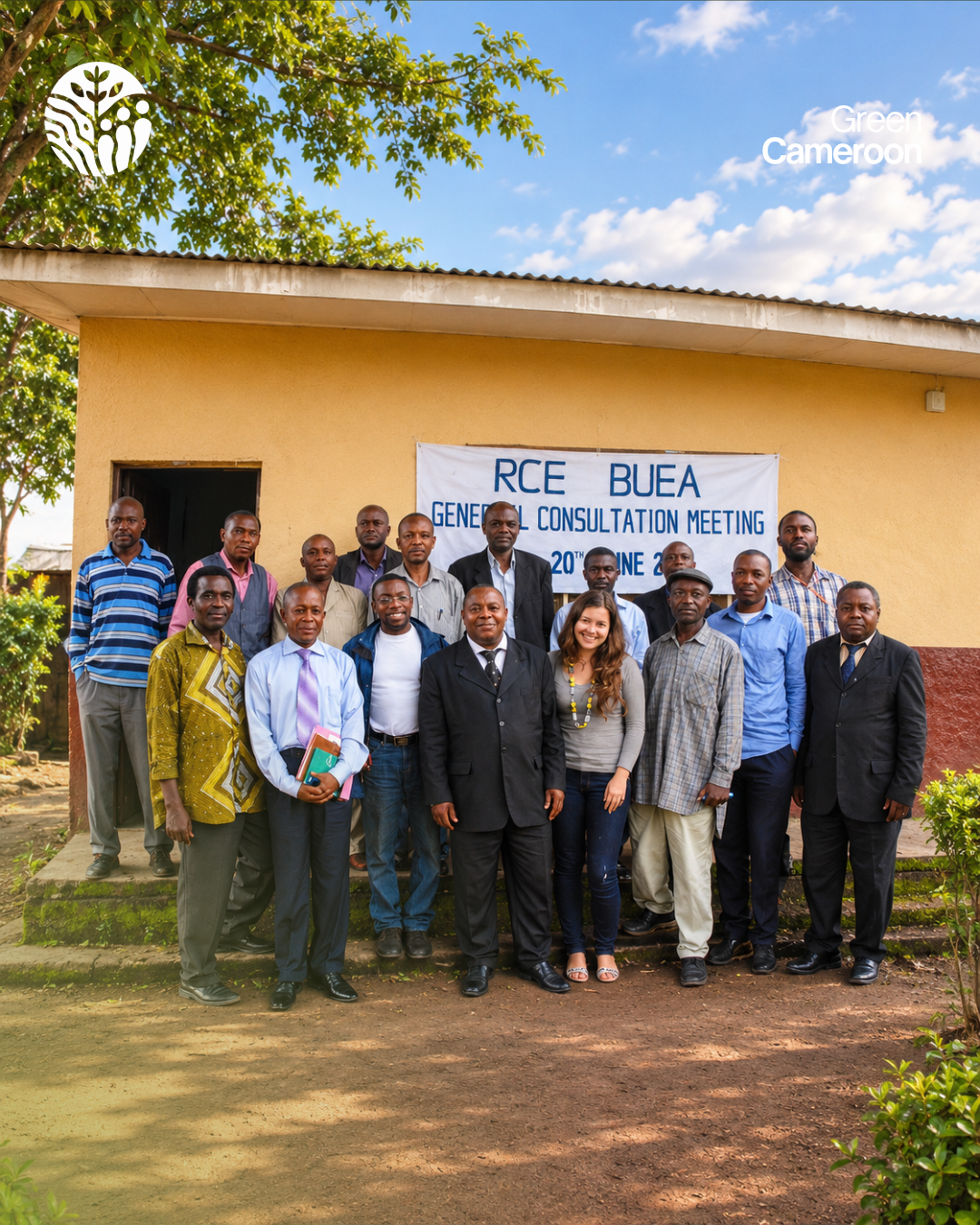
An important part of Green Cameroon’s history is connected to this idea. The organization initiated and championed the creation of the Regional Centre of Expertise on Education for Sustainable Development in Buea, known as RCE Buea, an initiative that sought to strengthen cooperation around sustainable development through education. The photograph records one moment in this process: the RCE Buea General Consultation Meeting, held in Buea on 20 June 2012. Later that year, in December, the initiative received formal acknowledgment from the United Nations University (UNU), marking an important milestone in its development.
The recognition connected an initiative rooted in Cameroon with an international network focused on education and sustainability. To understand why this moment matters, it is worth looking at what RCE Buea represents and the role Green Cameroon played in bringing the initiative together.
What Is a Regional Centre of Expertise?
A Regional Centre of Expertise, or RCE, is not simply an educational institution or a physical centre. It is a network that brings together existing organizations, educational institutions and individuals interested in advancing Education for Sustainable Development within a particular region.
The initiative was developed by the United Nations University Institute for the Advanced Study of Sustainability (UNU-IAS). Its purpose is to encourage collaboration between different sectors of society and create opportunities for sustainability education to become part of local and regional activities. The global RCE network connects organizations working in different contexts, allowing them to exchange knowledge, develop partnerships and contribute to sustainable development through education.
This model is particularly relevant because sustainability involves subjects that cannot be addressed by one area of knowledge alone. Environmental protection, economic development, education and social wellbeing are closely connected. Schools can contribute through learning activities, universities through research and technical knowledge, civil society organizations through community initiatives, and public institutions through planning and coordination.
An RCE creates a structure through which these different contributions can be connected. Rather than establishing an entirely separate organization to perform every activity, it brings existing actors together around shared objectives and encourages cooperation within their own regions.
Green Cameroon’s Role in Establishing RCE Buea
According to Green Cameroon’s official project documentation, the organization initiated and championed the creation of RCE Buea as part of its commitment to promoting Education for Sustainable Development in Cameroon. The initiative represented an extension of its environmental work, creating an opportunity to connect conservation activities with education, institutional cooperation and the exchange of knowledge.
The General Consultation Meeting held on 20 June 2012 was part of this history. The photograph captures representatives gathered in Buea under the RCE Buea banner, providing a record of an important moment in the initiative’s development. Although the photograph does not document every discussion or decision made during the meeting, it shows the collective nature of the process and the importance of bringing different participants together.
Six months later, in December 2012, RCE Buea received formal acknowledgment from the United Nations University. Green Cameroon identifies this recognition as an important achievement in its history of environmental education and sustainable development. Its official project page also records that the organization’s Executive Director, Masango Sone, was serving as Director and Board Chair of RCE Buea in the period described by the organization.
This development connected Green Cameroon’s local work with a wider international framework for Education for Sustainable Development. It also demonstrated that environmental initiatives developed within a particular community can become part of broader networks for learning and cooperation.
Why Collaboration Matters in Sustainable Development
One of the central ideas behind RCEs is that education for sustainability becomes more effective when different sectors are involved. Environmental challenges do not exist independently from social and economic conditions, and responding to them requires knowledge that comes from different experiences.
A university may contribute research and technical expertise, while an environmental organization may have experience working directly with communities. Schools can introduce sustainability topics to younger generations, and other institutions can help connect educational activities with regional priorities. When these contributions are brought together, there are more opportunities to exchange information, develop initiatives and approach complex issues from different perspectives.
This is especially important in environmental education. Learning about conservation is not limited to understanding the importance of forests, water or biodiversity. It also involves understanding how human activities influence natural resources, how communities depend on their surroundings and how decisions made today affect future conditions.
Green Cameroon’s involvement in RCE Buea reflects this broader perspective. The organization already had experience working with schools and communities through environmental projects, and the RCE initiative provided an additional framework for connecting education with sustainable development at a regional level.
The emphasis was therefore not simply on creating another environmental programme. It was on building relationships between organizations and people who could contribute to sustainability education in different ways.
Connecting Local Experiences with Global Knowledge
Although RCEs operate within particular regions, they are connected through an international network acknowledged by the United Nations University. This creates opportunities for organizations to exchange experiences with other regions and learn from initiatives developed in different social, cultural and environmental contexts.
For RCE Buea, this connection placed an initiative developed in Cameroon within a wider movement dedicated to Education for Sustainable Development. It created a relationship between local priorities and international discussions about how education can support more sustainable societies.
The value of this connection lies in the exchange itself. Environmental and development challenges may vary between countries, but many of the questions involved are shared. How can education encourage responsible resource management? How can institutions work more effectively with communities? How can knowledge be translated into practical activities? These questions benefit from conversations that extend beyond individual organizations and geographical boundaries.
The recognition by the United Nations University provided RCE Buea with a place within this international network. It is important, however, to understand what that recognition means: RCE Buea is a regional network acknowledged by UNU, not a United Nations agency or governmental institution. Its contribution is based on collaboration, education and the participation of its members.
Education as a Foundation for Sustainable Development
Education for Sustainable Development goes beyond teaching environmental subjects. It encourages people to understand the connections between environmental protection, social wellbeing and economic activity, helping them consider the consequences of their decisions and their role in building more sustainable communities.
This perspective is consistent with Green Cameroon’s wider activities. Since its establishment in 2003, the organization has worked with schools, communities and other institutions on initiatives involving biodiversity conservation, environmental education, climate change awareness, sustainable agriculture and natural resource management.
Its environmental clubs, community projects and educational campaigns show how sustainability can be approached through different forms of participation. Students can learn about environmental issues through school activities, while community members can gain practical knowledge through conservation and resource management initiatives.
RCE Buea added another dimension to this work by creating a framework for cooperation around sustainable development education. Instead of focusing exclusively on individual projects, the initiative brought attention to the importance of relationships between educational institutions, civil society and other regional actors.
That connection remains an important aspect of sustainability education: knowledge becomes more useful when it can circulate between institutions, communities and the people who are able to apply it in practice.
A Photograph That Preserves an Important Moment
Looking at the photograph today, it is possible to see more than a group of representatives gathered for a meeting. The banner identifies the occasion as the RCE Buea General Consultation Meeting, held on 20 June 2012. It preserves a moment in the development of an initiative that would receive formal acknowledgment from the United Nations University just a few months later.
Historical records such as this help document how environmental organizations develop their work over time. Projects, partnerships and institutional relationships are not always visible in the photographs of field activities or community events, but they are also part of the process through which conservation initiatives are established and strengthened.
For Green Cameroon, the creation of RCE Buea represents one of these moments. It reflects an effort to connect environmental education with a broader network of organizations and individuals committed to sustainable development.
The importance of this experience extends beyond the date of the meeting or the recognition received in December 2012. It highlights the value of creating spaces where knowledge can be shared, different perspectives can be heard and organizations can work together toward common objectives.
From Buea to a Wider Conversation
The story of RCE Buea is part of Green Cameroon’s broader history of connecting local environmental work with wider institutional and educational initiatives. The organization helped establish a regional network that brought Education for Sustainable Development into a framework of collaboration recognized by the United Nations University.
The photograph from June 2012 gives this history a tangible reference. It reminds us that institutional initiatives are built through people, meetings and shared efforts long before their achievements become part of an organization’s official record.
Environmental protection requires practical activities, but it also requires education, communication and cooperation between those who have the knowledge and responsibility to contribute. RCE Buea represents an example of how these elements can be brought together through a regional network.
Green Cameroon’s role in establishing this initiative remains an important part of its history, connecting its work in Cameroon with an international conversation about education and sustainable development.
Rooted in local collaboration, connected through shared knowledge.
