
A development project may begin with an idea, a proposal or a plan for change. But before deciding what should be built, introduced or improved, there is a question that deserves attention: what do the people living in that community actually need?
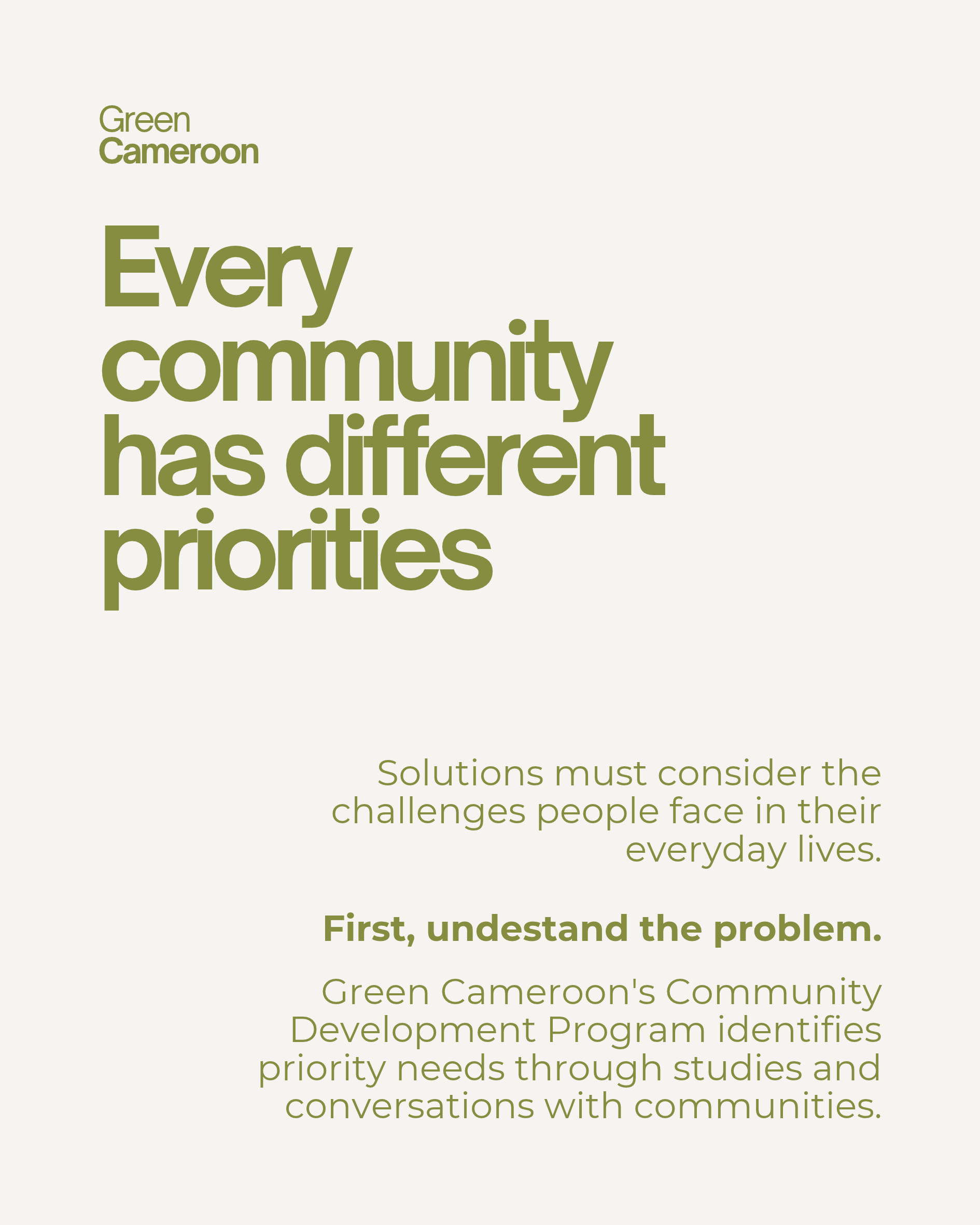
It is easy to approach development from the outside and assume that a solution that worked in one place will be equally useful somewhere else. In reality, every community has its own circumstances, challenges and priorities. Understanding these differences is essential to creating projects that respond to real needs rather than expectations formed without enough knowledge of the people involved.
This principle is reflected in Green Cameroon’s Community Development Program, an initiative focused on identifying and addressing priority problems in vulnerable communities across Cameroon. Through studies and conversations with local populations, the organization seeks to understand the challenges affecting everyday life, identify possible projects and develop practical solutions based on the needs expressed by the communities themselves.
The program has worked with the communities of Likoko, Naanga, Bokoko and Bonduma. In these locations, the lack of access to potable water was identified as a major concern. This finding illustrates why community development requires attention to the conditions people experience in their daily lives and why solutions need to be planned with those realities in mind.
Understanding Before Intervening
The first step in any community development initiative should be understanding the situation it aims to improve. This involves more than identifying a visible problem. It requires looking at the circumstances surrounding it, listening to the people affected and understanding how the issue influences their everyday lives.
For Green Cameroon, this process is part of the structure of its Community Development Program. The organization describes its approach as identifying priority problems through studies and community consultations. Once the needs have been identified, projects can be considered, possible solutions proposed and activities designed around the issues that have been recognized.
This way of working is important because development needs are not identical everywhere. Two communities may experience different difficulties even when they share similar environmental or geographical conditions. A project designed without considering these differences may address a problem that is not the community’s main priority, or introduce a solution that does not adequately respond to local circumstances.
Listening helps reduce that distance between the objectives of an organization and the actual needs of the people it intends to support. It allows local experiences to become part of the planning process, rather than treating communities simply as recipients of decisions made elsewhere.
For Green Cameroon, the objective is to make community development more closely connected to the realities of the people involved.
Four Communities, One Important Concern
Within its Community Development Program, Green Cameroon identifies four communities where it has worked: Likoko, Naanga, Bokoko and Bonduma. According to the organization’s published project description, access to potable water was identified as the main problem in these communities.
Access to safe drinking water is closely connected to daily life. It affects household routines, sanitation, health and the ability of families to meet basic needs. When reliable access is limited, obtaining water can become a recurring concern that influences how people organize their time and manage other responsibilities.
The identification of this issue across the four communities demonstrates the importance of understanding priorities before planning interventions. Rather than assuming that environmental or development projects should always focus on the same subjects, Green Cameroon used its community development approach to identify a specific need that deserved attention in these locations.
It is also important to recognize that identifying a shared concern does not mean that every community necessarily requires an identical solution. Local conditions, available water sources, infrastructure and the characteristics of each location need to be considered when developing a project. The initial identification of a problem is therefore the beginning of the planning process, not the end of it.
From Identifying Problems to Developing Solutions
Once a priority need has been identified, the next challenge is translating that understanding into a practical proposal. This is where studies, planning and collaboration become particularly important.
Green Cameroon describes its Community Development Program as a process in which problems are identified, proposals are developed and projects are designed around local needs. The organization’s documentation provides a concrete example of this approach: a project proposal was developed to provide potable water to the communities of Bokoko and Bonduma.
The same project description recorded fundraising efforts to support the proposal’s implementation. Because the published information does not provide a confirmed completion or final implementation update, it is important to distinguish between the development of the proposal and the actual delivery of the water supply system.
This distinction matters when discussing community development. Identifying a need is one stage. Preparing a project is another. Securing the necessary resources, organizing implementation and ensuring that a solution can continue to function are additional responsibilities.
A proposal can represent meaningful progress, but its intended benefits should not be presented as completed results until there is evidence that the project has been implemented. Being transparent about these stages is part of communicating development work responsibly.
For Green Cameroon, the process described in its program connects the initial understanding of local needs with the practical planning required to address them.
Why Community Participation Matters
One of the most important aspects of community development is the recognition that people should have a voice in decisions affecting their own surroundings. Local residents understand the difficulties they experience, the resources available to them and the conditions that influence their daily lives. Their perspectives can help organizations recognize problems that may not be immediately visible to someone approaching the community from outside.
This does not mean that local knowledge replaces technical expertise or the need for careful project planning. Both are necessary. Community members can explain their needs and experiences, while specialists and development organizations can contribute research, technical knowledge and organizational support. When these contributions are considered together, project proposals have a stronger connection to the conditions they are intended to address.
Green Cameroon’s approach places this relationship at the beginning of the development process. Through studies and conversations, the organization seeks to understand priority needs before proposing interventions. The message presented in its publication, that a project should start with listening, reflects this emphasis on consultation and local understanding.
Listening also means recognizing that communities are not all the same. A proposal that addresses the priorities of Bokoko or Bonduma may require adjustments before being considered for another location. What matters is not simply repeating an existing project, but understanding whether its approach is appropriate for the people and conditions involved.
Community Development and Sustainable Development
Community development is closely connected to environmental sustainability because people’s living conditions and the natural resources around them cannot always be considered separately. Access to water, land management, sanitation and the responsible use of natural resources all influence the wellbeing of communities.
Green Cameroon has incorporated this relationship into its broader mission. Its work includes environmental conservation, community development, water and sanitation, natural resource management and environmental education. These areas reflect an understanding that sustainable development involves more than protecting ecosystems in isolation. It also requires considering how people access essential resources and participate in decisions about their management.
The Community Development Program fits within this wider approach by focusing on practical problems identified in vulnerable communities. The example of potable water in Likoko, Naanga, Bokoko and Bonduma demonstrates how an environmental organization can also address needs that are directly connected to everyday living conditions.
This connection is especially relevant because access to water is both a basic community concern and an environmental management issue. Developing a water supply project requires consideration of available sources, infrastructure, water quality and the conditions needed to maintain the system. The planning process therefore needs to consider both the immediate needs of residents and the resources on which a project will depend.
Green Cameroon’s broader work in water management and environmental conservation provides context for why these subjects belong within the same development conversation.
Development Is a Process, Not Just a Proposal
There is an important difference between recognizing a problem and achieving a lasting improvement. A community may identify a need, an organization may develop a proposal and the necessary resources may eventually become available, but the process still requires careful implementation and attention to what happens afterward.
This is why the different stages of Green Cameroon’s Community Development Program matter. Studies help identify priority issues, conversations provide an opportunity to understand local perspectives, and project proposals translate those findings into possible actions. Each stage contributes to a process that begins with the people affected by the problem.
The example of Bokoko and Bonduma illustrates this progression. The lack of potable water was identified as a priority, and a project proposal was developed to address it. The published description records fundraising as part of the effort to move toward implementation, although it does not establish the final outcome.
Presenting these stages clearly helps readers understand how community initiatives actually develop. Not every identified need immediately becomes a completed project, and not every proposal advances at the same pace. Recognizing these realities does not diminish the importance of the work. It shows why planning, resources, coordination and continued engagement are necessary for development initiatives to move forward.
Listening as the Beginning of Meaningful Change
Green Cameroon’s Community Development Program highlights an approach that is easy to overlook when discussing environmental and social initiatives: the importance of understanding people before deciding what should be done for them.
The experiences of Likoko, Naanga, Bokoko and Bonduma show how a structured process of consultation and problem identification can help reveal priorities that deserve attention. In this case, access to potable water emerged as a major concern, leading to the development of a proposal for Bokoko and Bonduma.
The broader lesson is not that every community needs the same project. It is that every project needs to begin with a clear understanding of the people and circumstances it is meant to serve. Research can help explain the problem, conversations can bring local perspectives into the process, and careful planning can turn identified needs into practical proposals.
For Green Cameroon, community development means more than introducing interventions or delivering resources. It means taking the time to understand local realities and building projects around what communities identify as important.
Listen first. Understand better. Build together.
Because meaningful development does not begin with assuming what people need. It begins by giving them the opportunity to be heard.
